No products in the cart.


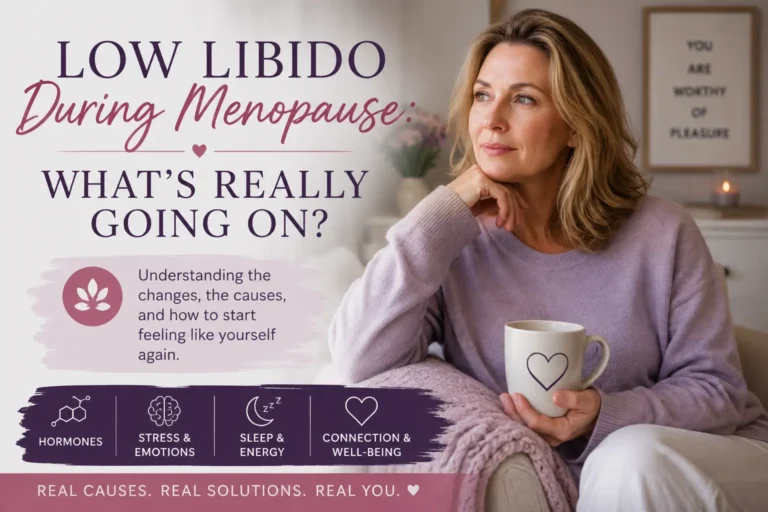
If you’re experiencing low libido during menopause, you may be wondering why something that once felt natural now seems distant, unpredictable, or simply less important. Desire can change significantly during perimenopause and menopause—but hormones are only one piece of a much bigger puzzle.
During the menopause transition, levels of estrogen, progesterone, and testosterone change. These shifts can affect sexual desire, arousal, vaginal lubrication, sensitivity, sleep, mood, and energy. But here’s where the conversation gets more interesting: there isn’t a single hormone responsible for desire. Your sexual response is influenced by what’s happening throughout your body and your life.
Sometimes what feels like a lack of desire actually begins with physical changes. Lower estrogen levels can contribute to vaginal dryness and changes in vaginal tissue. If intimacy becomes uncomfortable—or you anticipate that it might hurt—it’s understandable that your brain isn’t exactly rushing to put intimacy at the top of the agenda. We’ll spend much more time talking about comfort later in this series because it deserves its own conversation.
Think about what else may be competing for your attention. Are you sleeping well? Are you stressed? Do you feel comfortable in your changing body? Are you exhausted by the end of the day? How is your relationship? Are you taking medications that may affect sexual function?
Desire doesn’t exist in isolation.
That’s why simply telling a woman to “get in the mood” completely misses the point.
One of the most important things to understand is that desire doesn’t always arrive spontaneously. You may remember a time when you could suddenly feel interested in sex without anything happening beforehand. But for many women, particularly as they get older, desire may appear after something pleasurable begins.
That’s called responsive desire—and we’re going to explore it in our next article. Understanding that distinction can completely change the way you think about your libido.
Instead of asking, “Why don’t I want sex anymore?” we can start asking a much more useful question:
“What does my body need now to become interested?”
That shift—from judging your desire to understanding it—is where we begin.
Responsive Desire: Why You Don’t Have to Be “In the Mood” First
We’ll look at why desire sometimes follows pleasure rather than preceding it—and why that can be perfectly normal.
Check out this week’s curated products here. And as always, let me know if you have any questions.


Sign up for exclusive deals and promos.
Signup & Get 10 % Off
Sign up to our newsletter and get 10% off on your next purchase