No products in the cart.


When many people hear the word bondage, they immediately picture leather, chains, handcuffs, or dramatic movie scenes. Those images have created countless misconceptions, leaving many people wondering if bondage is something they should avoid altogether.
The reality is usually much different.
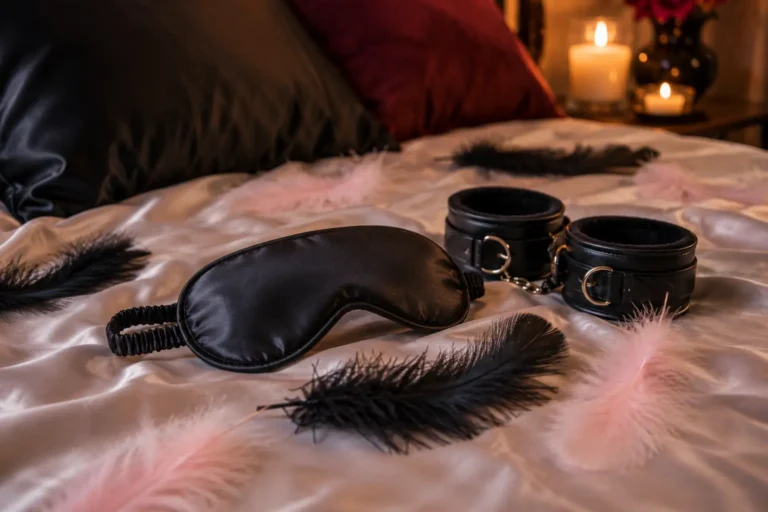
For many couples, bondage isn’t about pain or pushing boundaries. It’s about trust, communication, anticipation, and discovering new ways to connect. It doesn’t require elaborate equipment or advanced techniques, either. Many beginners start with something as simple as a satin blindfold or a pair of soft wrist cuffs designed specifically for first-time users.
If you’ve ever been curious about bondage but weren’t sure where to begin, this guide will walk you through the basics so you can decide whether it’s something you’d like to explore safely and confidently with your partner.
Bondage is one part of the broader world of BDSM, an umbrella term that describes several different types of consensual relationship dynamics and intimate activities.
BDSM stands for:
It’s important to remember that BDSM isn’t one activity. It’s a broad category that includes many different experiences. Some couples enjoy only light bondage or sensory play. Others may explore dominance and submission without ever using restraints. Every relationship is different, and there is no expectation that you need to enjoy every aspect of BDSM simply because one part interests you.
Bondage is simply the practice of voluntarily restricting movement between consenting adults during intimate play. That may sound intimidating, but bondage can be surprisingly simple.
For one couple, it might mean wearing a satin blindfold while a partner slowly explores their body with gentle touches. Another couple may enjoy padded wrist cuffs that are comfortable, adjustable, and easy to release. Others skip restraints altogether and focus on playful rules or anticipation.
Many beginners quickly discover that bondage isn’t really about being restrained. It’s about creating trust, building anticipation, and experiencing intimacy in a completely different way.
Every relationship settles into routines over time. While routines create comfort, they can also make intimacy feel predictable. Trying something new doesn’t mean jumping into anything extreme. Often, it’s simply about stepping outside your comfort zone together and sharing a new experience.
One of the reasons many people enjoy bondage has less to do with restraints and more to do with anticipation. When one sense—such as sight—is temporarily limited, the brain naturally pays more attention to touch, sound, and even scent. Familiar experiences can suddenly feel exciting again.
Others enjoy the emotional side of bondage. Placing yourself in a trusted partner’s care—or being entrusted with your partner’s comfort—can create a deeper sense of connection. For many couples, the conversations and trust they build become even more meaningful than the bondage itself.
One of the biggest misconceptions about bondage is that it begins with restraints.
It doesn’t.
It begins with a conversation.
Before purchasing any accessories, talk openly with your partner about what interests you, what makes you nervous, and what you definitely don’t want to try. These conversations don’t have to feel awkward. In fact, many couples find they become one of the most enjoyable parts of the experience because they’re learning more about each other.
Perhaps one of you is interested in wearing a blindfold, while the other prefers massage and sensory play. Maybe one of you isn’t interested in restraints at all. There are no right or wrong answers. The goal isn’t to convince your partner to try something new. It’s to understand each other better and decide what feels comfortable for both of you.
Every BDSM activity begins with enthusiastic consent. Both partners should genuinely want to participate, understand what they’re agreeing to, and know they can change their mind at any time. Many couples also choose a safe word before they begin.
One of the simplest systems is the traffic-light method:
Green – Everything feels good.
Yellow – Slow down or check in.
Red – Stop immediately.
Think of a safe word as another form of communication—not a sign that something has gone wrong. It allows both partners to relax because everyone knows they can speak up at any time.
One of the biggest mistakes beginners make is believing they need expensive equipment or advanced techniques. You don’t. Some of the simplest experiences are often the most enjoyable.
A satin blindfold can heighten anticipation by removing one sense. Soft beginner cuffs provide gentle restraint while remaining comfortable and easy to remove. Feather ticklers, massage oils, massage candles, and different textures can introduce new sensations without feeling intimidating.
Remember, you’re exploring together. You’re not trying to impress anyone.
Safety is what allows both partners to fully relax and enjoy the experience.
A few basic guidelines can make all the difference:
Most importantly, continue communicating throughout the experience. Checking in with one another helps ensure that both partners feel safe, respected, and comfortable.
One topic that doesn’t get nearly enough attention is aftercare. Aftercare is simply the time you spend reconnecting after intimacy. That may mean cuddling under a blanket, talking about what you enjoyed, laughing together, drinking water, or quietly holding one another.
Aftercare helps both partners reconnect emotionally and reinforces the trust that made the experience enjoyable in the first place. For many couples, it becomes one of the most meaningful parts of the evening.
1.Myth: Bondage is only for “kinky” couples.
Fact: Many couples simply want to try something new and discover different ways to connect.
2. Myth: Bondage always involves pain.
Fact: Many beginners never include pain at all. Their focus is on trust, anticipation, communication, and sensory exploration.
3. Myth: You need expensive equipment.
Fact: A few quality beginner products are often all you need to get started safely.
If you’re interested in exploring bondage, start with products designed for beginners rather than improvising with household items.
Good choices include:
Choose quality products that are designed with comfort and safety in mind, and add to your collection only as your confidence grows.
Bondage isn’t about becoming someone you’re not.
For most beginners, it’s simply another way to build trust, improve communication, and experience intimacy from a fresh perspective.
Whether you decide to try a blindfold, a beginner restraint set, or simply use this article as the beginning of a conversation with your partner, remember that there is no timeline and no pressure. Every couple moves at their own pace.
The strongest relationships aren’t built on elaborate equipment or dramatic experiences. They’re built on mutual respect, enthusiastic consent, honest communication, and a willingness to keep learning together.
Sometimes the greatest discovery isn’t a new product or technique. It’s realizing that trying something new can bring you closer than ever before.
When many people hear the word bondage, they immediately picture leather, chains, handcuffs, or scenes from movies that make it seem intimidating or extreme. Those images have created a lot of misconceptions, leaving many people curious but unsure whether bondage is something they would ever be interested in exploring.
The reality is often much different. For many couples, bondage isn’t about pain or pushing boundaries. It’s about trust, communication, anticipation, and discovering new ways to connect. It doesn’t have to involve elaborate equipment or advanced techniques. In fact, many couples who explore bondage for the first time begin with something as simple as a satin blindfold or a pair of soft wrist cuffs designed specifically for beginners.
If you’ve ever wondered what bondage is really about, this guide will help separate fact from fiction and explain how many couples safely explore this side of intimacy together.
You’ll often hear bondage discussed as part of BDSM, but many people don’t actually know what those letters mean.
BDSM is an umbrella term that covers a variety of consensual relationship dynamics and intimate activities. The letters stand for:
It’s important to understand that BDSM is not one single activity. Think of it as a large umbrella with many different experiences underneath it. Some couples enjoy only light bondage or sensory play and have no interest in dominance or pain. Others may enjoy power exchange without using restraints at all.
Every couple decides what feels exciting, comfortable, and appropriate for them. There is no expectation that if you enjoy one aspect of BDSM, you must enjoy the others.
Bondage is simply one part of BDSM and refers to voluntarily restricting movement between consenting adults during intimate play. That definition may sound clinical, but the experience itself can look very different from one couple to another.
For one couple, bondage may involve wearing a satin blindfold while their partner gently teases them with soft touches. Another couple may enjoy padded wrist cuffs designed for comfort and quick release. Others may never use restraints at all but instead enjoy the anticipation that comes from surrendering a small amount of control to a trusted partner.
For many beginners, bondage isn’t really about restraint. It’s about building trust, increasing anticipation, and experiencing intimacy in a different way.
Every relationship develops routines over time. While routines provide comfort, they can also make intimacy feel predictable. Trying something new doesn’t necessarily mean doing something extreme. Sometimes it simply means stepping outside your comfort zone together and discovering new ways to communicate, laugh, and connect.
Many couples say they enjoy beginner bondage because it encourages them to slow down. Instead of rushing through intimacy, they become more intentional about every touch, every kiss, and every conversation. Removing one sense—such as sight with a blindfold—can make the other senses feel more heightened and create a completely different experience. For many people, the emotional connection becomes even more rewarding than the physical experience.
One of the biggest misconceptions about bondage is that it begins with restraints.
It doesn’t.
It begins with communication.
Before purchasing a single accessory, sit down with your partner and talk honestly about what interests you. Discuss what sounds exciting, what makes you nervous, and what you know you don’t want to try. These conversations don’t have to be awkward. In fact, they often become an enjoyable part of the journey because you’re learning more about one another.
Perhaps one of you is interested in wearing a blindfold but has no interest in restraints. Maybe the other enjoys the idea of massage and sensory play instead. Every couple creates their own experience, and there are no right or wrong answers. The goal isn’t to convince anyone to participate. The goal is to understand each other better.
Consent should always be clear, enthusiastic, and ongoing. Both partners should genuinely want to participate and understand that either person can stop or change their mind at any point. Many experienced couples also use a safe word. While that may sound dramatic, it’s actually one of the simplest ways to improve communication.
A popular system uses traffic-light colors:
Green means everything feels good.
Yellow means slow down or check in.
Red means stop immediately.
Safe words aren’t a sign that something is wrong. They’re simply another tool that helps both partners feel respected, comfortable, and secure.
One mistake many beginners make is believing they need expensive equipment or complicated techniques. The truth is, some of the simplest experiences are often the most enjoyable. If you’re interested in exploring bondage, choose products designed specifically for beginners.
A satin blindfold can increase anticipation by removing one sense and allowing the others to become more noticeable and are inexpensive. Soft beginner wrist cuffs provide gentle restraint while remaining comfortable and easy to remove. Feather ticklers, massage oils, massage candles, and soft fabrics can all introduce new sensations without feeling intimidating.
The goal isn’t to build an extensive collection overnight. Start with one or two quality products and discover what you enjoy together.
Safety allows both partners to relax and enjoy the experience.
A few simple guidelines make all the difference:
Communication is what makes beginner bondage enjoyable and safe.
One topic that doesn’t receive nearly enough attention is aftercare. Aftercare refers to the time you spend reconnecting after intimacy. That may involve cuddling under a blanket, talking about what you enjoyed, laughing together, drinking water, or simply holding one another quietly.
For many couples, aftercare becomes one of the most meaningful parts of the experience because it reinforces trust and emotional closeness.
Many people assume bondage is only for adventurous couples. In reality, countless ordinary couples explore beginner bondage simply because they’re looking for new ways to connect.
Another myth is that bondage always involves pain. It doesn’t. Many beginners never include pain at all. Their focus is on trust, anticipation, communication, and shared exploration.
There’s also a misconception that expensive equipment is necessary. Fortunately, that’s far from the truth. A quality blindfold, beginner-friendly restraints, and an open mind are often all that’s needed to begin exploring together.
Bondage isn’t about becoming someone you’re not. For most beginners, it’s about creating opportunities to communicate more openly, trust more deeply, and experience intimacy in a fresh and exciting way.
Whether you decide to try a blindfold, a beginner restraint set, or simply use this article as the starting point for an honest conversation with your partner, remember there is no timeline and no pressure. Every couple moves at their own pace.
The strongest relationships aren’t built on elaborate equipment or dramatic experiences. They’re built on mutual respect, enthusiastic consent, open communication, and a willingness to continue learning together.
Sometimes, trying something new isn’t about changing your relationship at all. It’s about discovering another way to appreciate the connection you already have.

Sign up for exclusive deals and promos.
Signup & Get 10 % Off
Sign up to our newsletter and get 10% off on your next purchase