No products in the cart.


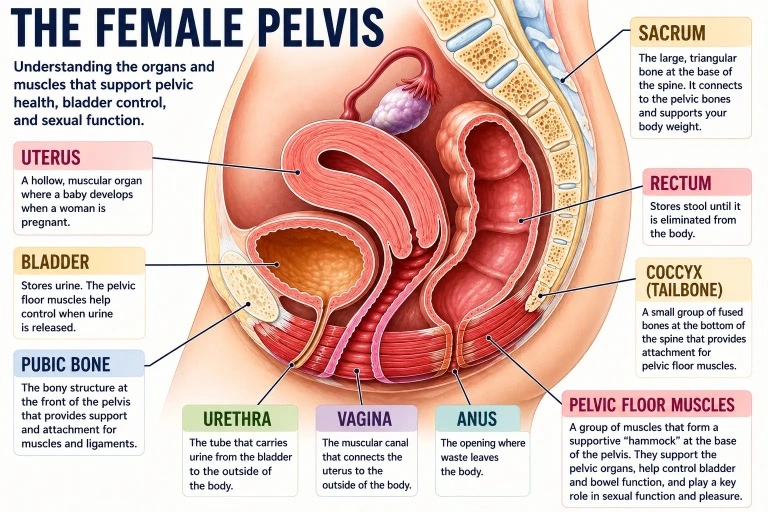
When it comes to pelvic floor health, most women think about bladder control. While that’s certainly important, the pelvic floor does much more than help prevent leaks. These muscles play a vital role in comfort, confidence, core strength, and even pleasure. During menopause, understanding how the pelvic floor functions can help women address common concerns and improve their overall quality of life.
The surprising part? Many women don’t think about their pelvic floor until something goes wrong. Yet these muscles are working for you every day.
The pelvic floor is a group of muscles that forms a supportive sling at the bottom of the pelvis.
These muscles help support:
They also play an important role in:
Think of the pelvic floor as part of your body’s foundation. When it’s functioning well, you probably don’t notice it. When it isn’t, symptoms can begin to appear.
As estrogen levels decline during menopause, changes occur throughout the body—including the pelvic floor.
Hormonal changes can contribute to:
Over time, some women notice symptoms they never experienced before. Others find existing issues become more noticeable. This doesn’t happen to everyone. But it happens often enough that it’s worth understanding.
Many women assume leaking urine is the only sign of a pelvic floor issue.
In reality, symptoms can include:
These symptoms can range from mild to significant. The important thing is recognizing them early rather than assuming they’re simply part of aging.
One aspect of pelvic floor health that doesn’t get discussed nearly enough is its connection to pleasure.
Healthy pelvic floor muscles contribute to:
This is one reason pelvic floor health is about much more than preventing leaks. It’s also about supporting overall sexual wellness. When pelvic floor muscles are functioning properly, many women report feeling more confident and comfortable during intimacy.
One of the biggest misconceptions about pelvic floor health is that everyone needs stronger pelvic floor muscles.That’s not always true. In some cases, pelvic floor muscles become overly tight rather than weak.
When muscles remain constantly tense, women may experience:
This is why simply doing endless Kegel exercises isn’t always the answer. The goal is healthy muscle function—not constant tightening. Sometimes the pelvic floor needs strengthening. Sometimes it needs relaxation. Sometimes it needs both.
Kegel exercises can be helpful for some women. They work by strengthening pelvic floor muscles through repeated contractions. However, they’re not a one-size-fits-all solution.
If you’re experiencing symptoms such as:
it may be worth consulting a healthcare provider or pelvic floor therapist before beginning a Kegel routine. The right approach depends on what’s actually happening with your muscles.
The good news is there are many ways to support pelvic floor health.
Healthy habits include:
Small daily habits often have a significant long-term impact.
Many women are surprised to learn that pelvic floor physical therapy exists. Pelvic floor therapists receive specialized training to evaluate and treat issues involving the muscles, tissues, and structures of the pelvic region.
They may help women experiencing:
For many women, pelvic floor therapy can be life-changing. It’s one of the most underutilized resources available for menopause-related concerns.
The pelvic floor may not be something you think about every day. But it affects more aspects of your life than you might realize. Supporting pelvic floor health isn’t just about preventing problems. It’s about improving comfort, confidence, function, and pleasure throughout menopause and beyond.
In our next article, we’ll explore natural ways to support libido during menopause and discuss practical strategies that can help reignite desire and connection.
For more information, please check out the following articles:



Sign up for exclusive deals and promos.
Signup & Get 10 % Off
Sign up to our newsletter and get 10% off on your next purchase