No products in the cart.



When it comes to menopause and intimacy, many women feel blindsided. We hear plenty about hot flushes, night sweats, and mood swings, but very few people talk about what happens when your desire changes, intimacy becomes uncomfortable, or you suddenly feel disconnected from a part of yourself that once came naturally.
One day you may feel perfectly normal, and the next, intimacy feels like the last thing on your mind. You may find yourself wondering where your desire went, why your body feels different, or why something that once felt natural now feels uncomfortable—or even painful.
If this sounds familiar, I want you to hear something important:
You are not broken.
In fact, what you’re experiencing is incredibly common.
When most people think about menopause, they think about declining estrogen. While estrogen certainly plays a major role, it’s only part of the story. As estrogen levels decrease, the tissues of the vagina can become thinner, less elastic, and less naturally lubricated. Blood flow to intimate tissues may also decline, affecting arousal and sensation.
But menopause isn’t just a hormonal event. Many women also experience changes in testosterone levels. Although we often think of testosterone as a male hormone, women produce it too. It contributes to sexual desire, energy levels, motivation, and overall well-being. When both estrogen and testosterone begin shifting, intimacy can feel very different than it did in your 20s or 30s.
One thing I hear from clients all the time is:
“I don’t even recognize myself anymore.”
That’s because menopause often creates what I call the perfect storm.
At the same time your hormones are changing, you’re often dealing with:
• Poor sleep due to night sweats or insomnia
• Increased stress from work, family, or caregiving responsibilities
• Body changes that affect confidence
• Joint pain, fatigue, or other physical symptoms
• Relationship challenges that may have been simmering beneath the surface for years
It’s difficult to feel interested in intimacy when you’re exhausted, stressed, uncomfortable, and wondering why your favorite jeans suddenly don’t fit. The problem isn’t a lack of effort. The problem is that your body is asking for support.
Many women tell me they no longer think about intimacy the way they used to. They assume this means they’ve lost their libido.
Not necessarily.
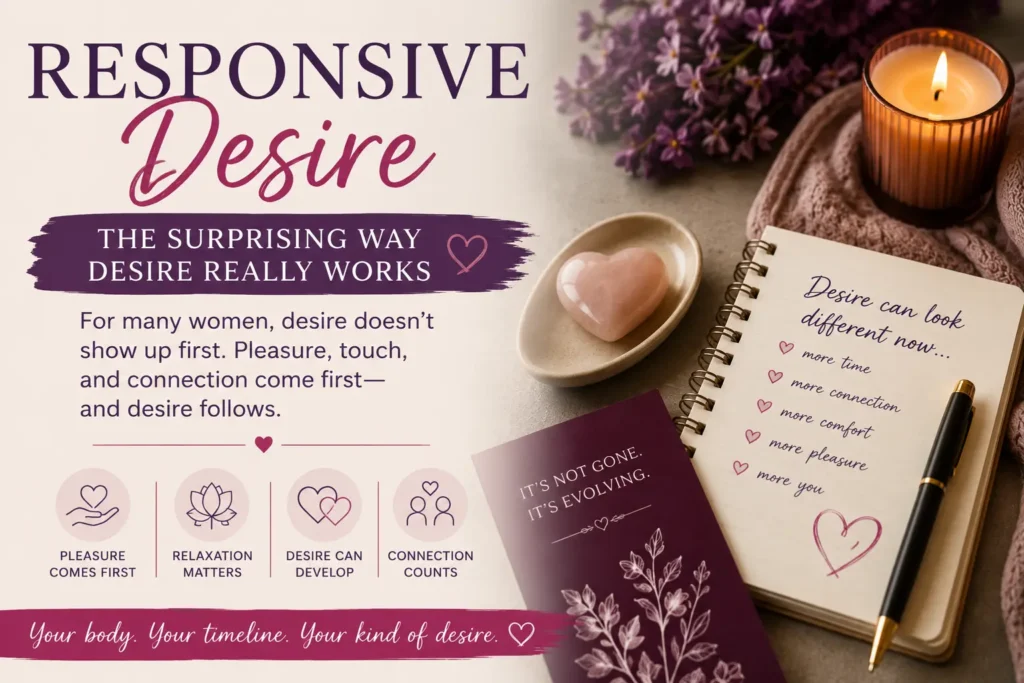
For many women, desire shifts from being spontaneous to being responsive. Spontaneous desire is the kind that seems to appear out of nowhere. Responsive desire develops after emotional connection, affection, flirting, touch, or physical stimulation has already begun.
In other words, you may not feel interested before intimacy begins, but you may become interested once you feel connected and engaged. Understanding this shift can be incredibly freeing because it helps women stop judging themselves for not feeling the same way they did decades ago.
Unfortunately, many couples don’t talk about these changes. The woman may feel guilty because her interest in intimacy has decreased. Her partner may feel rejected or confused. Over time, both people start making assumptions.
One thinks, “Something is wrong with me.”
The other thinks, “They don’t love me anymore.”
Neither assumption is usually true.
What is true is that menopause can change the way intimacy works within a relationship. Couples who communicate openly about these changes often navigate them much more successfully than couples who suffer in silence.
The good news is that menopause does not signal the end of intimacy. Far from it. Many women discover that this stage of life gives them permission to redefine intimacy on their own terms.
A few practical steps include:
• Prioritizing sleep and stress management
• Exploring high-quality lubricants and moisturizers when needed
• Having honest conversations with your partner
• Talking with your healthcare provider about symptoms affecting intimacy
• Learning about the physical and emotional changes that occur during menopause
Most importantly, give yourself grace. Your body is going through significant changes, and expecting it to function exactly as it did twenty years ago isn’t realistic.
• Have I noticed changes in comfort during intimacy?
• Am I experiencing more stress or fatigue than I did a few years ago?
• Have I talked openly with my partner about these changes?
• Am I assuming something is “wrong” with me instead of seeking answers?
Menopause changes many things, but it does not take away your ability to experience pleasure, connection, affection, or desire. The rules may have changed. But the game is far from over.
In the next article, we’ll take a closer look at one of the most common—and most treatable—symptoms affecting intimacy during menopause: vaginal dryness, irritation, and discomfort.

Sign up for exclusive deals and promos.
Signup & Get 10 % Off
Sign up to our newsletter and get 10% off on your next purchase